

Patterns are everywhere, from the stripes on a zebra to the spots on a ladybug. For preschoolers, recognizing and creating patterns isn’t just a fun activity; it’s a vital building block for math and critical thinking skills. Imagine a world where kids can spot a pattern faster than they can say “supercalifragilisticexpialidocious!” That’s the magic of pattern activities.
Understanding Patterns in Early Education
Recognizing and creating patterns plays a significant role in early education. Engaging in these activities lays the groundwork for critical math skills and boosts children’s analytical thinking.
Importance of Pattern Recognition
Pattern recognition serves as a vital skill for preschoolers. Children learn to identify sequences and predict what comes next. This foundational ability supports future skills in mathematics and science. Recognizing patterns also enhances language development through vocabulary expansion associated with patterns. Lastly, these activities foster social skills as children often work together in group settings.
Cognitive Benefits for Preschoolers
Cognitive growth benefits significantly from engaging in pattern activities. Children enhance their logical thinking as they determine the rules governing different patterns. They develop problem-solving skills when faced with challenges related to patterns. Memory retention improves as children recall previous patterns during these activities. Completion of pattern tasks boosts confidence, encouraging children to tackle more complex concepts in the future.
Types of Pattern Activities
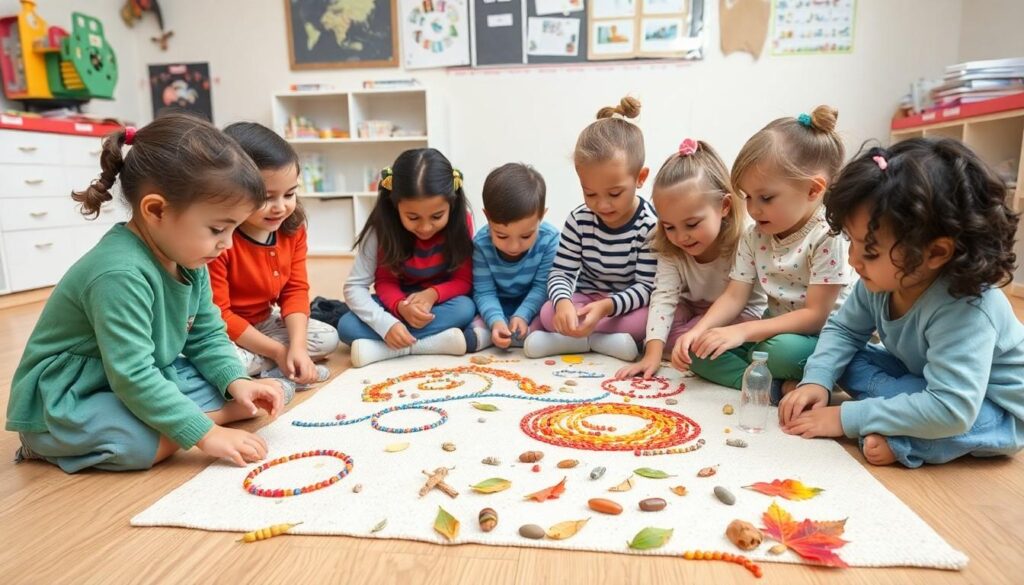
Pattern activities come in various forms, engaging preschoolers in recognizing and creating patterns through multiple senses. These diverse activities enhance cognitive development while keeping children active and entertained.
Visual Patterns
Visual patterns utilize colors, shapes, and pictures to help children recognize and create sequences. Using colored beads, children can string them together in specific orders, reinforcing their understanding of patterns. Worksheets featuring patterns allow preschoolers to identify what comes next or color specific shapes according to given sequences. Additionally, using nature items, like leaves and stones, children can create physical patterns on the ground. Activities like these stimulate visual recognition and classification skills, fostering engagement and creativity.
Auditory Patterns
Auditory patterns rely on sounds to enhance listening skills and rhythm recognition in young learners. Clapping hands in specific sequences encourages children to follow and predict sound patterns. Using musical instruments, like tambourines or shakers, allows them to explore sound variations and repeat rhythms. Singing songs that include repetitive phrases also promotes auditory pattern recognition, as children learn through repetition. Engaging in these auditory activities fosters language skills and supports cognitive processing, setting the stage for advanced learning.
Hands-On Pattern Activities for Preschoolers
Engaging preschoolers in hands-on pattern activities enriches their learning experience while promoting essential skills.
Craft Projects
Craft projects offer diverse ways to explore patterns. Children can create simple patterns using materials such as colored paper, markers, or stickers. For instance, making necklaces with beads in alternating colors strengthens sequencing skills and boosts creativity. Incorporating shapes like triangles and circles allows kids to visualize patterns in different forms. Each project cultivates fine motor skills and encourages collaborative play. As preschoolers share their creations, they communicate their thought processes, further enhancing language development.
Nature Walks
Nature walks provide a dynamic way to discover natural patterns. During these walks, children can observe patterns in leaves, flowers, and stones. Collecting items like pinecones and acorns allows them to create sequences based on color or size back in the classroom. Spotting patterns in nature fosters observation skills and connects learning to the environment. Discussing findings in a group enables preschoolers to articulate their experiences and insights. This enhances social interaction and nurtures critical thinking as they compare and contrast the patterns they find.
Digital Resources for Pattern Activities
Digital resources enrich preschoolers’ engagement with patterns. These tools offer interactive and fun ways to enhance learning experiences.
Educational Apps
Educational apps provide preschoolers with colorful interfaces and engaging activities. Apps like “Endless Alphabet” and “Todo Math” introduce pattern recognition through games and challenges. Visual cues reinforce learning while tracking progress keeps children motivated. Kids can enjoy various activities, including sorting and sequencing tasks, designed to build foundational skills. Many apps also encourage parental involvement, making it easy for caregivers to participate in the learning process.
Online Games
Online games create an interactive atmosphere for preschool pattern activities. Websites such as ABCmouse and PBS Kids feature various pattern-related games. These games often use animations and sound effects to maintain children’s interest. Preschoolers can explore activities like matching shapes or completing sequences, promoting cognitive development and critical thinking. Opportunities for group play enhance social skills, allowing children to collaborate and share their discoveries while learning.
Conclusion
Pattern activities offer preschoolers a dynamic way to develop essential skills while having fun. These engaging tasks not only boost mathematical understanding but also enhance critical thinking and language abilities. By incorporating various sensory experiences and hands-on projects, children can explore patterns in exciting and meaningful ways.
Digital resources further enrich these activities, providing interactive platforms that captivate young learners. As preschoolers engage in recognizing and creating patterns, they build a strong foundation for future learning. Encouraging these activities at home and in educational settings fosters a love for learning and equips children with the tools they need for success.